
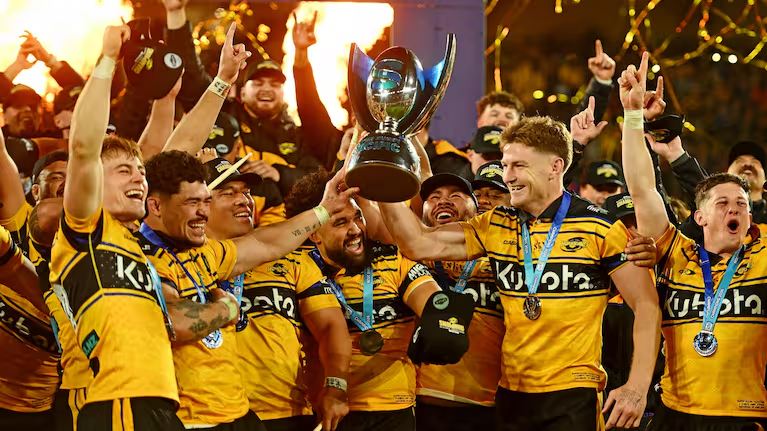
It was tribalism at its finest this weekend.
A Hurricanes side lifting the Super Rugby Pacific title.
The Wahs faithful erupting at Te Kawa Stadium.
Egyptian fans celebrating like they’d won the World Cup — even after beating the All Whites.
Different colours. Different nations. Different backgrounds.
But for a moment, none of that mattered.
We were united by something simple: a shared dream.
Sport does this. It pulls strangers into one heartbeat. It gives us permission to celebrate together, suffer together, and take ownership of “our” team — even if we’ve never met a single player.
And here’s the uncomfortable question:
Why can stadiums achieve what churches can’t?
Why can 30,000 strangers roar in unison while 300 Christians in the same city can’t even agree on whether to pray together?
Why does a Hurricanes jersey unite more powerfully than the name of Christ?
Why does a Warriors chant echo louder than the collective witness of the Church?
We don’t like these questions — because we already know the answers.
The Church: Strangers in Our Own Land — and to One Another
New Zealand has changed. Christians have become strangers in their own country.
But worse — we’ve become strangers to each other.
We are a minority now, but instead of linking arms, we’ve built silos.
Instead of unity, we’ve chosen branding.
Instead of fellowship, we’ve chosen franchise.
We claim to love the same God.
We claim the same Scriptures.
We claim the same Saviour.
And yet we behave like competing tribes fighting for territory.
The irony is painful:
We want full churches, but we don’t want to be one Church.
We want revival, but we don’t want relationship.
We want influence, but we don’t want inconvenience.
We want unity, but only if it looks like our version of Christianity.
Meanwhile, the culture marches on — loudly, confidently, united in its opposition to biblical truth — while the people of God whisper in their corners, hoping someone else will speak up first.
The Brian Tamaki Problem — And What It Reveals About Us
Let’s address the elephant in the sanctuary.
It’s easy — very easy — to scoff at Brian Tamaki and Destiny Church.
I don’t agree with how he does things, and I’ve said so publicly.
But here’s the uncomfortable truth:
He is one of the only church leaders consistently calling out the cultural attacks on faith, family, and biblical truth.
Whether you like him or not, the fact that his voice often stands alone says more about us than it does about him.
We can disagree with his methods.
We can critique his tone.
We can roll our eyes at the theatrics.
But at least he’s speaking.
The rest of us?
We’ve mistaken silence for maturity.
We’ve mistaken politeness for holiness.
We’ve mistaken passivity for unity.
Let’s be honest:
Silence is not unity. Silence is surrender.
And surrender is exactly what we’ve been doing — quietly, politely, and with excellent coffee in the foyer.
What Jesus Actually Said About Division
Here’s the Scripture block you asked for — and it hits harder than any sermon series on “community” ever will:
“Every kingdom divided against itself will be ruined, and every house divided against itself will fall.”
— Matthew 12:25
Jesus didn’t give this warning to the Roman Empire.
He didn’t give it to the Pharisees.
He didn’t give it to the pagans.
He gave it to us.
A divided Church cannot stand.
A divided Church cannot influence.
A divided Church cannot disciple a nation.
A divided Church cannot survive cultural hostility.
We keep praying for revival while refusing to repair the fractures in our own house.
We want God to move — but we won’t move toward each other.
Why Unity Matters Now More Than Ever
Unity is not a warm feeling.
It is not a worship song.
It is not a handshake during the “greeting time.”
Unity is a weapon.
Unity is a witness.
Unity is a strategy.
And right now, the Church in New Zealand is strategically disarmed.
We are divided by denomination, divided by style, divided by ethnicity, divided by theology, divided by personality, divided by preference, divided by history, divided by suspicion.
Meanwhile, the stadiums show us what unity looks like:
- People wearing the same colours
- People shouting the same chant
- People celebrating the same victory
- People suffering the same loss
- People who don’t know each other — but act like family
Imagine if Christians did that.
Imagine if we celebrated being children of God with the same passion we see in stadiums.
Imagine if unity in Christ mattered more than denominational labels.
Imagine if the Church roared louder than the crowd at a Warriors home game.
Imagine if we were known for our unity instead of our fragmentation.
Maybe then — just maybe — our churches would be filled to bursting on Sundays, not just our sports arenas.
Application: What Unity Actually Requires
Unity is not everyone agreeing on everything.
Unity is not pretending differences don’t exist.
Unity is not theological mush.
Unity is this:
1. A shared allegiance to Christ above all else
Not to a denomination.
Not to a brand.
Not to a personality.
Not to a worship style.
Not to a political tribe.
2. A willingness to link arms even when we disagree
Unity is forged in discomfort, not convenience.
3. A commitment to speak truth together
A lone voice is a target.
A united voice is a movement.
4. A refusal to let the culture divide us
If the world can unite around a rugby ball, surely the Church can unite around a risen Saviour.
5. A holy ownership of our faith
Sports fans wear their colours with pride.
Christians hide theirs under a jacket.
It’s time to reverse that.
The Real Question: What Would Unity Look Like in Your Church?
Not in the abstract.
Not in theory.
Not in a conference.
Not in a mission statement.
In your actual church.
With your actual people.
In your actual community.
Would it look like shared prayer?
Shared mission?
Shared repentance?
Shared courage?
Shared witness?
Or would it look like the same old silos — just with nicer branding?
The Final Word
This week, I’m asking you to do one thing:
Choose unity over tribalism.
Not unity in silence.
Not unity in compromise.
Unity in Christ — the only banner worth lifting.
Because if the stadium can roar in one voice, the Church has no excuse.
And if we don’t rediscover unity soon, we won’t just be strangers in our own land —
we’ll be strangers to the very faith we claim to defend.
If you want, I can also produce:
- A shorter 600‑word version
- A punchier “hero section” for CVNZ
- A version tailored for pastors
- A version tailored for the ON POINT newsletter
Just tell me which direction you want to take it.
Why the Church Should Learn From a Rugby Crowd
It was tribalism at its finest this weekend.
A Hurricanes side lifting the Super Rugby Pacific title.
The Wahs faithful erupting at Te Kawa Stadium.
Egyptian fans celebrating like they’d won the World Cup — even after beating the All Whites.
Different colours. Different nations. Different backgrounds.
But for a moment, none of that mattered.
We were united by something simple: a shared dream.
Sport does this. It pulls strangers into one heartbeat. It gives us permission to celebrate together, suffer together, and take ownership of “our” team — even if we’ve never met a single player.
And here’s the uncomfortable question:
Why can stadiums achieve what churches can’t?
Why can 30,000 strangers roar in unison while 300 Christians in the same city can’t even agree on whether to pray together?
Why does a Hurricanes jersey unite more powerfully than the name of Christ?
Why does a Warriors chant echo louder than the collective witness of the Church?
We don’t like these questions — because we already know the answers.
The Church: Strangers in Our Own Land — and to One Another
New Zealand has changed. Christians have become strangers in their own country.
But worse — we’ve become strangers to each other.
We are a minority now, but instead of linking arms, we’ve built silos.
Instead of unity, we’ve chosen branding.
Instead of fellowship, we’ve chosen franchise.
We claim to love the same God.
We claim the same Scriptures.
We claim the same Saviour.
And yet we behave like competing tribes fighting for territory.
The irony is painful:
We want full churches, but we don’t want to be one Church.
We want revival, but we don’t want relationship.
We want influence, but we don’t want inconvenience.
We want unity, but only if it looks like our version of Christianity.
Meanwhile, the culture marches on — loudly, confidently, united in its opposition to biblical truth — while the people of God whisper in their corners, hoping someone else will speak up first.
The Brian Tamaki Problem — And What It Reveals About Us
Let’s address the elephant in the sanctuary.
It’s easy — very easy — to scoff at Brian Tamaki and Destiny Church.
I don’t agree with how he does things, and I’ve said so publicly.
But here’s the uncomfortable truth:
He is one of the only church leaders consistently calling out the cultural attacks on faith, family, and biblical truth.
Whether you like him or not, the fact that his voice often stands alone says more about us than it does about him.
We can disagree with his methods.
We can critique his tone.
We can roll our eyes at the theatrics.
But at least he’s speaking.
The rest of us?
We’ve mistaken silence for maturity.
We’ve mistaken politeness for holiness.
We’ve mistaken passivity for unity.
Let’s be honest:
Silence is not unity. Silence is surrender.
And surrender is exactly what we’ve been doing — quietly, politely, and with excellent coffee in the foyer.
What Jesus Actually Said About Division
Here’s the Scripture block you asked for — and it hits harder than any sermon series on “community” ever will:
“Every kingdom divided against itself will be ruined, and every house divided against itself will fall.”
— Matthew 12:25
Jesus didn’t give this warning to the Roman Empire.
He didn’t give it to the Pharisees.
He didn’t give it to the pagans.
He gave it to us.
A divided Church cannot stand.
A divided Church cannot influence.
A divided Church cannot disciple a nation.
A divided Church cannot survive cultural hostility.
We keep praying for revival while refusing to repair the fractures in our own house.
We want God to move — but we won’t move toward each other.
Why Unity Matters Now More Than Ever
Unity is not a warm feeling.
It is not a worship song.
It is not a handshake during the “greeting time.”
Unity is a weapon.
Unity is a witness.
Unity is a strategy.
And right now, the Church in New Zealand is strategically disarmed.
We are divided by denomination, divided by style, divided by ethnicity, divided by theology, divided by personality, divided by preference, divided by history, divided by suspicion.
Meanwhile, the stadiums show us what unity looks like:
- People wearing the same colours
- People shouting the same chant
- People celebrating the same victory
- People suffering the same loss
- People who don’t know each other — but act like family
Imagine if Christians did that.
Imagine if we celebrated being children of God with the same passion we see in stadiums.
Imagine if unity in Christ mattered more than denominational labels.
Imagine if the Church roared louder than the crowd at a Warriors home game.
Imagine if we were known for our unity instead of our fragmentation.
Maybe then — just maybe — our churches would be filled to bursting on Sundays, not just our sports arenas.
Application: What Unity Actually Requires
Unity is not everyone agreeing on everything.
Unity is not pretending differences don’t exist.
Unity is not theological mush.
Unity is this:
1. A shared allegiance to Christ above all else
Not to a denomination.
Not to a brand.
Not to a personality.
Not to a worship style.
Not to a political tribe.
2. A willingness to link arms even when we disagree
Unity is forged in discomfort, not convenience.
3. A commitment to speak truth together
A lone voice is a target.
A united voice is a movement.
4. A refusal to let the culture divide us
If the world can unite around a rugby ball, surely the Church can unite around a risen Saviour.
5. A holy ownership of our faith
Sports fans wear their colours with pride.
Christians hide theirs under a jacket.
It’s time to reverse that.
The Real Question: What Would Unity Look Like in Your Church?
Not in the abstract.
Not in theory.
Not in a conference.
Not in a mission statement.
In your actual church.
With your actual people.
In your actual community.
Would it look like shared prayer?
Shared mission?
Shared repentance?
Shared courage?
Shared witness?
Or would it look like the same old silos — just with nicer branding?
The Final Word
This week, I’m asking you to do one thing:
Choose unity over tribalism.
Not unity in silence.
Not unity in compromise.
Unity in Christ — the only banner worth lifting.
Because if the stadium can roar in one voice, the Church has no excuse.
And if we don’t rediscover unity soon, we won’t just be strangers in our own land —
we’ll be strangers to the very faith we claim to defend.