
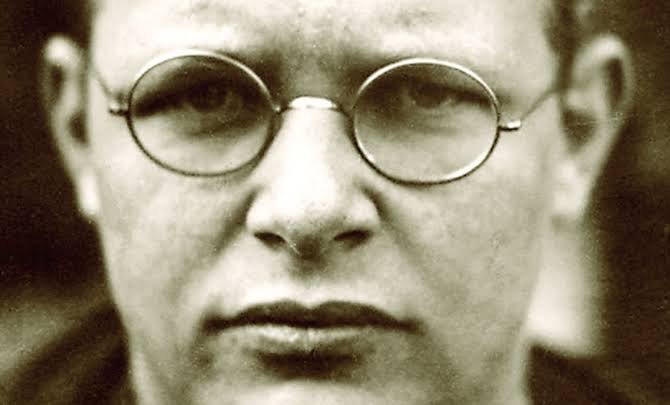
Dietrich Bonhoeffer understood something that modern Christianity often forgets: evil does not require our approval — only our silence. In the shadow of the Third Reich, he watched churches retreat into pious neutrality, convinced that silence was safer than truth. It was in that crucible that he wrote the words that have echoed through every generation since:
“Silence in the face of evil is itself evil. God will not hold us guiltless. Not to speak is to speak. Not to act is to act.”
Bonhoeffer was not offering a slogan. He was diagnosing a disease — a spiritual paralysis that grips nations when truth becomes costly. And if we are honest, New Zealand is showing symptoms.
I. The Right to Silence: A Legal Protection That Became a Cultural Habit
The right to silence exists to protect the vulnerable from coercion. But in New Zealand, it has evolved into something else — a cultural reflex, a shield used not only in police stations but in public life, in institutions, and even in the Church.
The Kahui case remains one of the clearest examples. Two infants died. A family closed ranks. A wall of silence rose. Justice suffocated. The tragedy was not only the deaths — it was the collective refusal to speak.
Bonhoeffer would have recognised this instantly. He saw how silence, when weaponised, becomes a form of violence.
II. The Moral Vacuum Created by Cultural Silence
New Zealand is loud where it should be quiet, and quiet where it should be loud.
We shout slogans about global conflicts we barely understand. We whisper about the moral crises unfolding in our own neighbourhoods. We rage about political controversies. We tiptoe around the suffering of the vulnerable.
Bonhoeffer warned that when society loses its moral voice, it does not become neutral — it becomes complicit. Silence is not the absence of speech; it is the absence of courage.
III. The Church’s Silence: A Theological Failure, Not a Political One
Some argue that the Church should avoid geopolitics, avoid controversy, avoid “taking sides.” But Bonhoeffer rejected that logic entirely. For him, the Church’s calling was not political neutrality — it was moral clarity.
When the vulnerable are harmed, the Church speaks. When injustice advances, the Church resists. When truth is distorted, the Church corrects. This is not politics — it is discipleship.
Yet in New Zealand, the Church has grown hesitant. Hesitant to speak about abortion. Hesitant to confront abuse within its own walls. Hesitant to challenge cultural narratives that devalue human life. Hesitant to call sin what Scripture calls sin.
Bonhoeffer saw this same hesitation in Germany’s churches — a desire to preserve comfort rather than confront evil. He called it what it was: disobedience disguised as prudence.
IV. Abortion and the Theology of the Unheard Cry
New Zealand mourned the Kahui twins — rightly. But every year, thousands of unborn children die silently, without vigils, without headlines, without outrage.
Bonhoeffer wrote extensively on the value of human life, insisting that the Christian ethic begins with the protection of the vulnerable. For him, the unborn were not a political issue — they were a theological one. They were image‑bearers.
The Church’s silence here is not neutrality. It is abdication.
To remain silent while the vulnerable perish is to stand at a distance from Christ Himself, who identified with “the least of these.”
V. Institutional Silence: When the Church Protects Itself Instead of the Truth
Bonhoeffer’s greatest frustration was not with the Nazis — it was with the churches that refused to confront them. He saw institutions choosing reputation over righteousness, comfort over courage, silence over truth.
New Zealand has not been immune to this. Some Christian organisations have failed to confront abuse, failed to protect victims, failed to expose wrongdoing. Not because of theology — but because silence is easier than repentance.
Bonhoeffer would have called this what it is: theological cowardice.
VI. The Bonhoeffer Imperative: Drive a Spoke Into the Wheel
Bonhoeffer did not believe in passive Christianity. He wrote:
“We are not to simply bandage the wounds of victims beneath the wheels of injustice; we are to drive a spoke into the wheel itself.”
This is the heart of his theology: Christianity is not merely a faith of compassion — it is a faith of confrontation.
To follow Christ is to resist evil. To speak truth is to expose darkness. To act is to interrupt injustice.
New Zealand does not need louder politics. It needs louder truth. It needs Christians who refuse to hide behind silence. It needs churches that recover their prophetic voice.
VII. Conclusion: Silence Is Not an Option
Bonhoeffer’s life ended in a Nazi prison, but his theology lives because it speaks to every generation that faces moral crisis.
New Zealand is facing one now. Not because evil is new — but because silence is growing.
The Church must decide whether it will be:
- a chaplain to culture or
- a witness to Christ.
One path leads to comfort. The other leads to courage.
Bonhoeffer chose courage. Christ demands it.
And New Zealand desperately needs it.