

New Zealand keeps making laws, but fewer and fewer of them mean anything. The National Party’s latest promise to “modernise” consent legislation is a perfect example: well‑intentioned, morally important, yet introduced into a country already drowning in rules nobody enforces. We legislate faster than we live, and we regulate more than we ever intend to police.
Our lawbook is enormous — thousands of pages, thousands of offences, thousands of boundaries. But boundaries only matter when someone is willing to defend them. Raise the speed limit to 120 km/h and people still blast past you. Ban cell phones while driving and half the country keeps scrolling. Mandate helmets, restrict firearms, outlaw smacking — and watch how quickly the public shrugs. We’ve become a nation where law is symbolic, not functional.
This is not how law was meant to work.
New Zealand’s legal tradition traces back to the Westminster system, which itself was shaped by something far older: the Mosaic Law. More than 600 commands given to Moses — moral, ceremonial, and civil — forming a covenant between God and His people. These laws weren’t abstract. They were lived, enforced, and understood. They defined boundaries and consequences. They shaped a people.
And when those boundaries were ignored, God acted. There was accountability. There was a moral centre. There was a shared understanding of right and wrong.
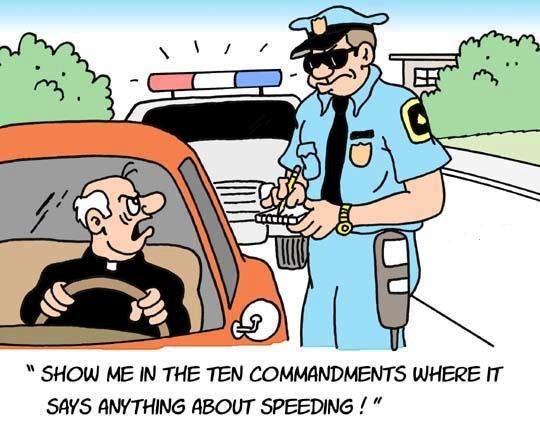
Today, we have the opposite problem. We legislate consequences but rarely apply them. We create boundaries but refuse to defend them. We rewrite cultural narratives, reinterpret history, and reshape morality until everyone simply does what is right in their own eyes — exactly as in the days of the Judges.
“In those days Israel had no king; everyone did what was right in their own eyes.” (Judges 17:6)
Sound familiar?
Some New Zealanders want strict boundaries. Others want libertarian freedom. But neither approach works when the law itself becomes a cultural prop — a knee‑jerk reaction to tragedy, a symbolic gesture to appease outrage, or a political announcement designed to win a weekend headline.
The purpose of law is simple: to define boundaries, and to enforce consequences when those boundaries are crossed.
Without enforcement, law becomes noise. Without moral grounding, law becomes opinion. Without accountability, law becomes theatre. And without shared truth, a nation loses its centre.
We are living in that drift. A country with more laws than ever, and fewer boundaries than at any point in our history. A nation without enforcement, without clarity, without a moral anchor.
Modernising laws won’t fix that. Recovering the meaning of law might. Recovering the moral foundation beneath it certainly would.