

Election campaigns promise a brighter future, a better government and solutions to the nation’s problems. But beneath the slogans lies an ancient temptation: the belief that humanity can build heaven on earth without God. The story of Babel suggests otherwise.
“We have simply exchanged bricks for bureaucracy and towers for manifestos.”
I have a confession.
I am a political junkie.
Election campaigns are my version of Netflix. While normal people pursue hobbies, fulfil meaningful life goals, or spend time outdoors, I find myself consuming policy announcements, leaders’ debates, political commentary and polling data with the enthusiasm of a lab rat repeatedly pressing the reward button.
The media know this.
Every election cycle they become the nation’s dealer, pushing another hit of outrage, another poll, another scandal, another prediction, another “game-changing moment” that changes absolutely nothing.
And like addicts everywhere, we keep coming back.
The remarkable thing about elections is that politicians somehow discover a miracle-working ministry every three years.
Suddenly there is money for everything.
Roads, hospitals, schools, economy, climate, life, even the neighbour’s life will all improve.
Even the cat looks likely to receive a targeted support package.
It is a magical season.
For six glorious weeks there appears to be enough money to solve every problem known to mankind.
The only awkward question is who is going to pay for it all.
That is usually the moment our political superheroes begin looking nervously at their shoes.

Yet despite my addiction to politics, this is not really an article about elections.
It is about promises.
More specifically, it is about the oldest promise in politics.
Build the right system. Elect the right leader. Pass the right law. Fund the right programme.
Create the right strategy. And paradise is only one election away.
The Tower of Babel had a remarkably similar vision.
Humanity has never suffered from a shortage of plans. It has suffered from a shortage of humility.
The Babel project was mankind’s first great attempt to build heaven on earth without God.
Thousands of years later, we are still trying.
We have simply exchanged bricks for bureaucracy and towers for manifestos.
Every election campaign presents another collection of saviours.
Some wear red. Some wear blue. Some wear colours we had never heard of six months ago.
All promise a brighter future.
The problem is not that politicians make promises.
The problem is that voters keep expecting them to deliver things only God can provide.
Politics can write legislation. It cannot write righteousness into the human heart.
It can build prisons. It cannot cure sin.
It can restrain evil. It cannot redeem mankind.
That should not surprise us.
Scripture has always been realistic about the human condition. The prophet Jeremiah observed, “The heart is deceitful above all things and beyond cure” (Jeremiah 17:9). Human beings do not suddenly become virtuous because they win an election.
Nor does wisdom arrive with a ministerial warrant.
The Bible repeatedly warns against placing our ultimate trust in human rulers. As Psalm 146 puts it, “Do not put your trust in princes, in human beings, who cannot save.”
If that verse were widely followed, much of modern political journalism would collapse overnight.
This does not mean Christians should withdraw from public life.
Far from it. We should vote. We should speak. We should advocate for what is good, just and true. We should seek the welfare of our nation.
And we should be salt and light in a culture that seems increasingly determined to lose both its flavour and its bearings.
But we should never confuse political participation with Christian hope.
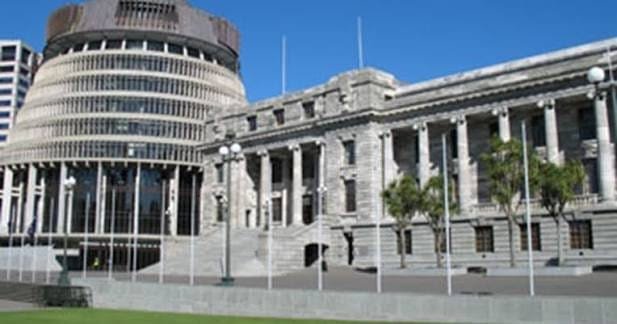
Because our hope is not in Wellington.
It is not in polling booths, campaign launches, coalition agreements or election-night speeches.
The lesson of Babel was never that mankind lacks intelligence.
It was that mankind cannot save itself.
From Genesis to Revelation, the Bible tells the same story. Humanity continually attempts to climb upward. God continually calls us to look upward.
At Babel, mankind sought to reach heaven.
In Christ, heaven came down to mankind.
That is why the Bible’s answer to a broken world is not a better politician.
It is a returning King.
Isaiah foresaw a government resting upon Christ’s shoulders. John saw a day when every tear would be wiped away. Peter looked forward to a new heaven and a new earth where righteousness dwells.
Those promises are far more ambitious than anything ever printed in a party manifesto.
And unlike election pledges, they are guaranteed by the One who made them.

So yes, I will vote.
I will vote because righteousness matters.
I will vote because truth matters.
I will vote because Christians are called to be salt and light.
I will vote because the direction of a nation matters.
But when the signs come down, the promises are forgotten and victorious politicians declare the dawn of a new era, I will remember the lesson of Babel.
Humanity’s greatest problem has never been a lack of intelligence, resources or political organisation.
It is that mankind cannot save itself.
Every election offers another attempt to build a better tower.
The Gospel offers a better King.
The world does not need another political messiah. It already has a Saviour.
And unlike every government before Him, He will keep every promise He has made.