
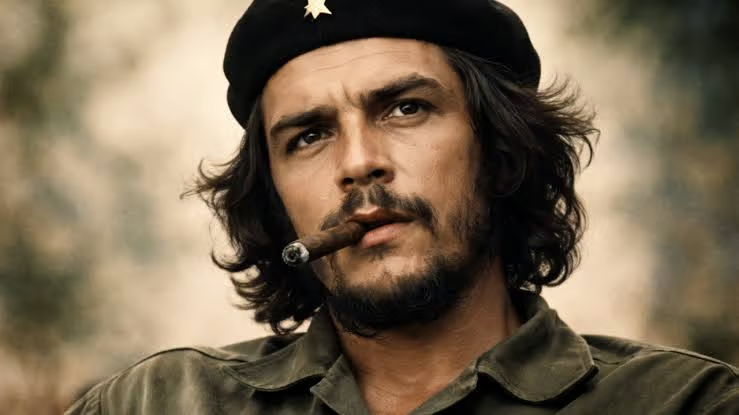
Why two people can see the same facts and arrive at completely different conclusions
One man’s terrorist is another man’s freedom fighter.
Nobody really knows who first said it, but the phrase has endured because it exposes an uncomfortable truth. Two people can look at the same person, the same event, the same set of facts, and reach completely different conclusions.
One sees a hero; another sees a villain.
One sees oppression. The other sees liberation.
One sees justice. The other sees injustice.
The question is: why?
What is it that causes two intelligent people, looking at the same evidence, to walk away believing entirely different things?
We often blame upbringing, education, culture, politics, family influences, geography, or life experience. Certainly, all of those play a part. None of us grows up in a vacuum.
But I suspect there’s something deeper going on.
Take creation as an example.
Millions look at the complexity of the universe, the intricate design of living things, the finely balanced laws of nature, and conclude there must be a Creator.
Millions of others look at exactly the same evidence and conclude there isn’t.
They’re looking at the same stars, oceans, the same DNA and the same world.
Yet they arrive at entirely different conclusions.
Why?
Because facts alone do not determine what we believe.
We interpret facts through a lens and this lens is called a worldview.
A worldview is the framework through which we understand reality. It shapes what we believe is true, what we believe is right and wrong, where we think humanity came from, and where we think we’re going.
The important thing to understand is that everybody has one.
Christians have a worldview, so do atheists, Muslims, even political conservatives have a worldview which is different to that of a political progressives worldview.
Even those who claim to have no worldview usually have one. They simply haven’t identified it yet.
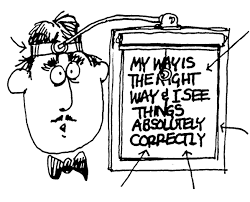
The real battle is rarely about the facts themselves.
The real battle is over the lens through which those facts are interpreted.
That explains why modern debates feel so frustrating. Often, we’re not disagreeing about a single issue. We’re disagreeing about the foundations beneath the issue.
Consider the West today.
Writer A.C. Rosenthal recently observed that we have “kept the furniture of a Christian civilisation while evicting the family that built it.”
It’s a brilliant description of where we find ourselves.
We still believe in human rights. We still talk about equality. We still champion compassion.
We still demand justice. We still argue that every human life has value.
But we increasingly reject the very worldview that gave birth to those ideas.
The belief that every person possesses inherent dignity because they were created in the image of God is not a universal human belief that emerged naturally across history. It is a distinctly biblical idea that transformed nations, laws, and cultures.
Today many people want the benefits of Christianity while distancing themselves from Christ.
They want the fruit but not the root. The furniture but not the family. The moral capital while rejecting the account it was withdrawn from.
That works for a while. But eventually the bill arrives.
The Bible says our problem isn’t ultimately a lack of information.
It is a problem of the heart.
Romans 1 tells us that mankind suppresses the truth. That’s a confronting statement because it suggests the greatest obstacle to seeing clearly isn’t intelligence.
It’s willingness.
The prophet Isaiah issued a warning that echoes loudly into our own generation:
“Woe unto them that call evil good, and good evil; that put darkness for light, and light for darkness.”
Look around and it’s hard not to wonder whether we’re watching that happen in real time.
Not because people are stupid or because information is scarce.
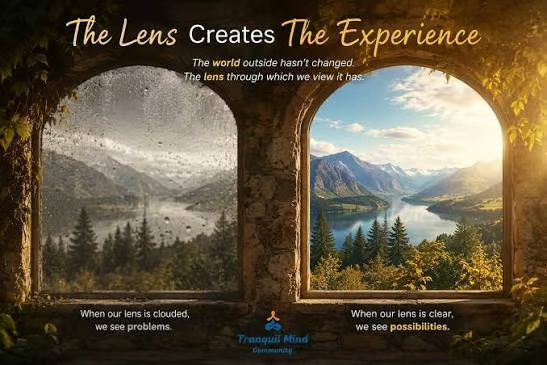
But because when we reject the Author of truth, our ability to recognise truth begins to suffer.
The further we drift from God’s perspective, the easier it becomes to redefine almost anything.
Good becomes bad. Bad becomes good. Truth becomes opinion. Feelings become facts.
And before long, society finds itself arguing not just about answers, but about reality itself.
That’s where we are today.
We are drowning in information but starving for wisdom.
We have more experts than ever before and less agreement about what is true.
More communication and less understanding.
More opinions and less certainty. And that brings us back to the original question.
Why do two people see the same thing and believe something completely different?
Because the lens matters. The worldview matters. The condition of the heart matters.
The Christian faith makes an extraordinary claim. It says there is such a thing as objective truth because there is an objective God. Truth is not determined by majority vote, social media trends, political ideology, or whatever happens to be fashionable this week.
Truth is grounded in the character of God Himself.
So perhaps the most important question any of us can ask is not, “What do I believe?”
It is, “Why do I believe it?”
What lens am I looking through? And is that lens bringing reality into focus, or distorting what I see?
My challenge to you as a reader is simple.
Don’t merely examine the world around you.
Examine the worldview through which you’re interpreting it.
Test it.
Challenge it.
Follow it to its logical conclusion.
And then compare it with the claims of Christ.
Because Christianity is not simply offering another opinion in the marketplace of ideas. It is making a far bolder claim.
It claims that truth is not a concept.
Truth is a person.
Jesus said, “I am the way, the truth, and the life.”
If that claim is true, then the greatest need of our age is not more information, more debate, or even more facts.
It is to see clearly.
And that only happens when we stop looking at the world through our own eyes and start seeing it through the lens of the One who created it.