
Mike Bain
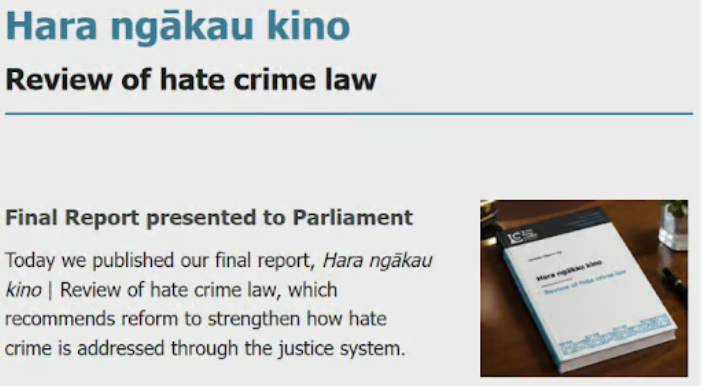
New Zealand is once again circling the drain on hate‑speech laws, and Christians need to stop pretending this debate doesn’t involve us. The Law Commission’s Hara ngākau kino report did one thing absolutely right: it refused to resurrect blasphemy laws under a modern diversity label. It kept hate speech out of scope, focused on punishing violent conduct, and refused to criminalise disagreement. In a political climate where every offence becomes a crisis and every lobby group wants its beliefs wrapped in bubble‑wrap, that restraint is rare — and worth defending.
Ani O’Brien’s analysis is blunt, and she’s right: some groups in New Zealand want legal protection not for people, but for ideas. And once you start criminalising criticism of religious doctrine, you are not protecting minorities — you are protecting theology. That is not the job of a secular state. It is not the job of Parliament. And Christians should be the first to say so.
Because here’s the uncomfortable truth: Christians know what it feels like to be mocked, misrepresented, and dismissed. We know what it’s like to hold convictions that the culture hates. We know what it’s like to be told our beliefs are “harmful,” “bigoted,” or “outdated.” But our response cannot be to demand censorship. The Gospel does not need a speech‑police escort.
Scripture gives us a posture that is both fierce and gracious. Paul commands us to “speak the truth in love” (Ephesians 4:15). Not silence. Not appeasement. Truth — delivered with love, not with legal threats. And Jesus Himself sets the tone: “Bless those who curse you, pray for those who mistreat you” (Luke 6:28). That is not weakness. That is confidence. A faith that needs the state to protect it is not a faith at all — it’s insecurity with a lobbyist.
New Zealand repealed blasphemous libel in 2019 because we recognised that modern democracy cannot treat irreverence as a crime. That principle must not be quietly reversed because a loud group insists its beliefs are too sacred to be criticised. If Christians want the freedom to preach Christ crucified, we must defend the freedom of others to reject, question, or even ridicule Christianity. Free speech is not a one‑way privilege. It is a two‑way street, and Christians must walk it with integrity.
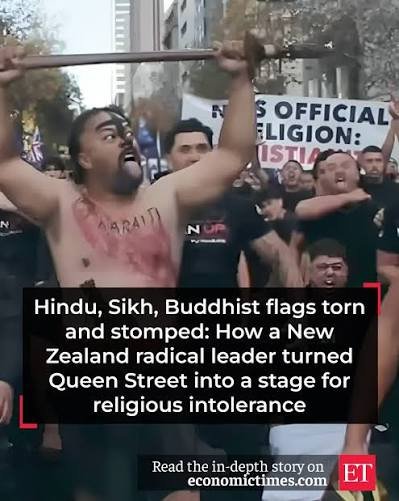
Let’s be clear: hateful conduct is real. Violence is real. Intimidation is real. In Hamilton, a protest outside a synagogue last year crossed the line from political expression into outright menace. In Auckland, threats against Muslim and Jewish communities spiked after overseas conflicts. And in 2025, when Tamaki supporters burned religious and political flags, the spectacle was deliberately provocative. Christians should condemn all of it — loudly. Hate‑motivated violence must be punished, and the Law Commission’s recommendations for better data, clearer sentencing, and stronger denunciation are exactly the right tools.
But none of that requires criminalising speech. None of that requires resurrecting blasphemy laws. None of that requires treating criticism of religion as hostility toward people. The moment the law starts protecting ideas instead of citizens, every faith community loses — including ours.
Christians must also confront our own temptations. Some believers in New Zealand have slipped into reflexive hostility toward Islam or Judaism, often fuelled by overseas conflicts. That is not righteous anger. That is sin. The Gospel does not permit tribalism. It does not permit contempt. It does not permit us to treat any group as an enemy. Our calling is to love our neighbour — including the neighbour whose theology we believe is wrong.
But loving our neighbour does not mean silencing ourselves. It does not mean pretending all beliefs are equal. It does not mean surrendering truth to avoid offence. Christians can — and must — critique ideas that harm people. We must speak plainly about doctrines that subordinate women, erase conscience, or deny equality. We must speak clearly about moral truth, sexuality, marriage, and the nature of God. But we must do it without hatred, without malice, and without demanding the state punish those who disagree.
Our mission is persuasion, not coercion. The church grows through witness, service, courage, and truth — not through legal protection. When Christians demand censorship of opposing ideas, we betray the very freedom that allows us to proclaim Christ openly.
New Zealand stands at a crossroads. One path leads to a society where people are protected but ideas are contestable. The other leads to a society where beliefs become untouchable and criticism becomes a crime. Christians must choose the first path — not because it is comfortable, but because it is biblical.
We defend people. We debate ideas. We refuse censorship. We speak truth in love — and we let the Gospel stand on its own two feet.