
| Editorial: Mike Bain |
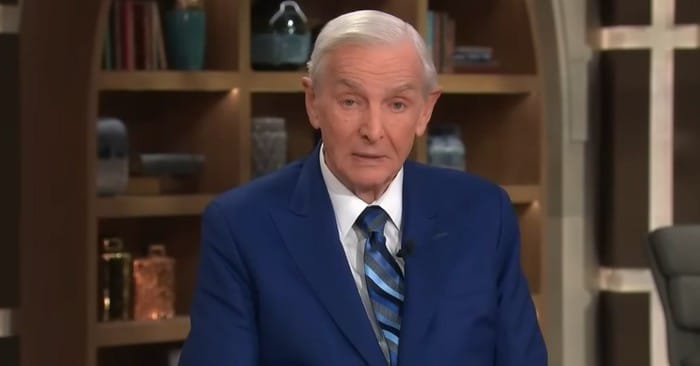
| Recently I received a short clip from a pastoral friend in Taumarunui of Dr David Jeremiah speaking about what he called “the Golden Age” — the era after Armageddon, the Millennial reign, when heaven descends to earth and Satan is bound. That truth sits in our Bibles, plain as day. Yet Jeremiah delivered it as if it were a startling revelation. Why does that feel like news to so many Christians? |
| For decades I’ve sat under pulpits that dodge Revelation. We get sermons about the Rapture, sensational headlines, and speculative timelines — but almost never clear teaching on how Revelation 20 actually unfolds. That avoidance is not humility; it’s cowardice. If pastors won’t preach the full counsel of Scripture because it’s “too hard,” they are failing their flocks. |
 Dr David Jeremiah Dr David Jeremiah |
| When I was a Bible student (and I remain one), Revelation 20 didn’t confuse me — it connected the whole story. From Genesis to Revelation the narrative is coherent: God’s original intent, the fall, redemption, and final restoration. Hebrews 11:1 isn’t a pious slogan; it’s the posture of anyone who reads Scripture honestly: faith is confidence in what we hope for and assurance about what we do not see. If you preach only the parts that comfort the crowd and avoid the parts that demand clarity, you are selling a truncated gospel. |
| Some pastors hide behind the excuse that Revelation is “mysterious.” That’s a convenient dodge. Mystery is not an invitation to silence; it’s an invitation to study, to teach, and to prepare people for the victory God promises. Former MP Alfred Ngaro once said he began reading the Bible from the back because he wanted a foundation of victory. That’s the right instinct. Start with the end and the rest of Scripture falls into place. |
| Let’s be blunt: the church needs fewer entertainers and more exegetes. We need leaders who will read Revelation aloud, explain it plainly, and help people live in light of the promised outcome. If your pastor refuses to go there, ask why. If your leaders prefer applause to accountability, call it out. Faith without teaching is superstition; teaching without courage is cowardice. |
| Seeing Dr Jeremiah now — older, frailer, still proclaiming the Word — was a reminder that faithful voices matter. There are many pastors who quietly, faithfully, and courageously preach truth without the spotlight. They are the coaches who push you to finish well. Don’t let the loud, flashy voices drown them out. Don’t let the culture of avoidance shape your theology. |
| Read Revelation. Read it again. Demand teaching that prepares you for the whole story, not just the comfortable chapters. If the church won’t teach the end, then the people will be left with fear, confusion, and a faith that cannot stand the test. |
| Hold fast. Be bold. Insist on truth. |
Category: Blog
Your blog category
Staying Awake While Predators Preach
| Editorial: Mike Bain |
| Jesus told his disciples to stay awake, to keep on the watch, to watch out that no one deceives you. Those were not optional suggestions. They were commands. Yet here we stand in New Zealand with a church that has drifted into a spiritual coma while the return of Christ draws near. |
| The call to vigilance is not sentimental. It is urgent and uncompromising. To be awake means to test teaching, to measure every sermon and every policy against the Word, and to refuse the soft seduction of cultural approval. Watching is not passive. It is active resistance. |
| When I say “church” I mean both the people and the institution that claims to lead them. The institution has a way of swallowing the people’s faith and regurgitating a version of Christianity that fits the moment. The gathering of believers often mirrors that compromise because leadership sets the course. The result is a people who still attend on Sunday but leave unchanged, spiritually malnourished, and ill-equipped for the journey God intended. |
 |
| There are those who climb the pulpit with the voice of God but the agenda of the age. They preach what is popular, profitable, and palatable. They trade prophetic courage for cultural applause. They shepherd toward convenience, not covenant. These are not always obvious villains. They smile, they quote scripture selectively, they baptize compromise with pious language. The flock follows because the path is easy and the shepherd’s voice is familiar. |
| Centuries ago the Reformation rose because the institution had become arrogant and corrupt. Reformers risked everything to call the church back to truth. Today the danger is subtler but no less deadly: an institution that has traded moral clarity for cultural relevance, that has lowered standards and redefined holiness to fit the marketplace. Moses led a people forty years because of leadership failure. Today, Christian leaders are guiding flocks into barren spiritual landscapes where faith withers. |
| A church that is awake produces disciples who think, who resist, who live by conscience and conviction. A church that sleeps produces consumers who attend services as entertainment, who confuse emotion for transformation, and who mistake window dressing for worship. The cost is not merely cultural embarrassment. It is souls wandering in the wilderness, generations without a firm foundation, and a witness that no longer points to Christ. |
| This is not a call to cynicism but to repentance and courage. Leaders must be held accountable. Congregations must demand teaching that convicts and corrects. We must recover the disciplines that form character: Scripture read and obeyed, prayer that wrestles, preaching that confronts sin and calls to holiness. We must refuse the easy path and choose the narrow road. |
| Wake up. Test every teaching. Refuse the pulpit predators who dress compromise in sacred language. Stand firm in the eyes of God, not in the eyes of culture. The return of Christ is not a distant headline. It is the horizon that should sharpen our vision and steady our feet. If the institution will not lead, the people must rise. If the leaders will not repent, the flock must demand truth. No more window dressing. No more shallow Sundays. Stay awake. Keep on the watch. Do not be deceived. |
When War Breaks Out, Keep Watch
| Editorial: Mike Bain. |
| It has finally happened: a combined U.S. and Israeli strike on Iran. On Friday I sat in my office wondering which outrage the hand‑wringers would choose next. Then, on Monday morning, the world woke to the news and the uneasy certainty that another war had begun. |
| The U.S. naval fleet had been positioned off the Iranian coast, and political leaders were publicly tense. In the swirl of headlines and hot takes, it was easy to see how events that seemed improbable suddenly became inevitable. We should not be surprised when history repeats its hard lessons. When Rome surrounded Jerusalem in AD 70, the warning signs were there for those who would look. The historian Josephus recorded the siege and the destruction that followed. |
 The American Fleet assembled off Iran’s coast over the past month The American Fleet assembled off Iran’s coast over the past month |
| Jesus warned his followers to read the signs of the times and to be ready. He said, “So when you see standing in the holy place the abomination that causes desolation, spoken of through the prophet Daniel—let the reader understand—then let those who are in Judea flee to the mountains.” Matthew records this warning as part of a larger call to watchfulness. |
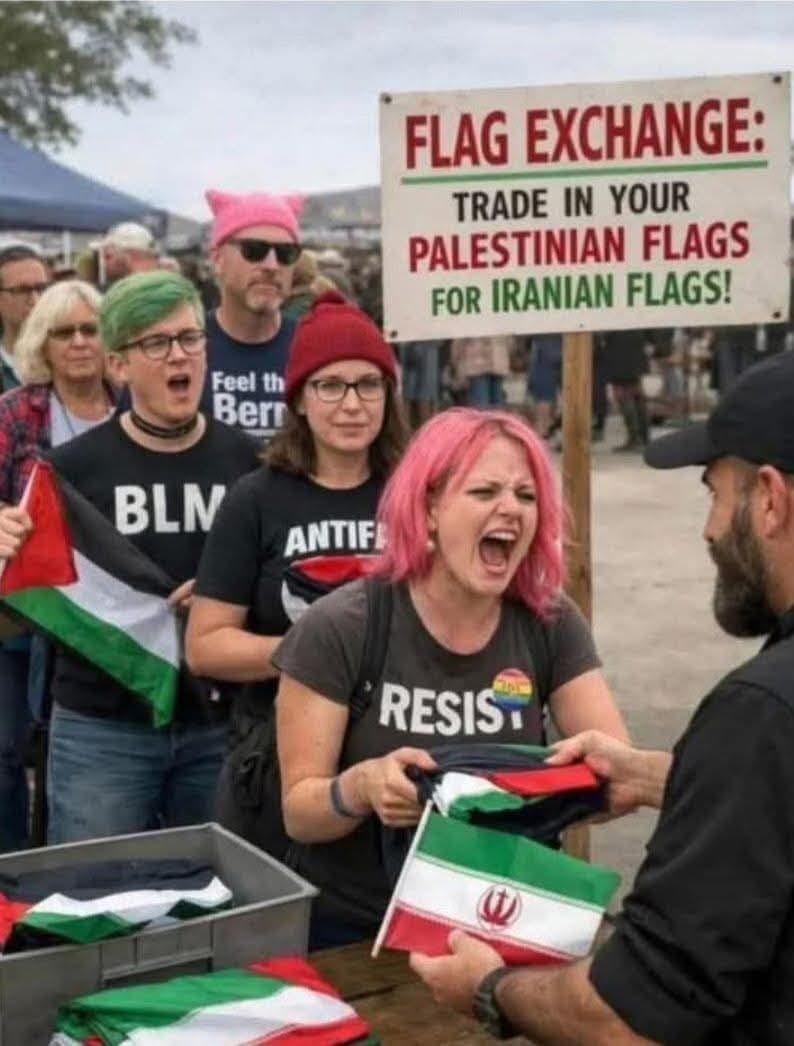
| The Bible also reminds us that life moves in seasons. Solomon wrote, “There is a time for everything, and a season for every activity under the heavens: a time for war and a time for peace.” In moments like this, that verse helps us accept the reality that conflict can be part of God’s providential timeline even as we pray for peace. |
 keeping your protest merchandise is all important in a changing world keeping your protest merchandise is all important in a changing world |
| So where does that leave us? First, we must resist complacency. Second, we must avoid the easy cynicism of the hand‑wringers who treat every crisis as a chance to posture. Third, we must remember that nothing takes God by surprise. Jesus repeatedly urged his disciples to stay awake and be watchful; our calling is to live faithfully and soberly while trusting God’s sovereign plan. |
| Finally, we hold to the hope of Scripture: God will make all things new. John’s vision closes with a promise of a new heaven and a new earth where mourning and pain are gone and God dwells with his people. That future hope shapes how we respond now—praying for the living, grieving the dead, seeking justice, and offering mercy. |
A Reflection on Division in New Zealand
| Editorial: Mike Bain |
| This scenario could have played out in many small community meetings in any town in New Zealand, where two neighbours who had once shared a fence and a cup of sugar left the room without speaking after a disagreement about a local or national issue. |
| Over the past year I have often lamented the division we see in New Zealand. If I am honest, that division has been present from the first day people arrived on our shores. Division is nothing new to humanity. In the post‑Flood account in Genesis — in what scholars call the Table of Nations — we read that “the earth was divided.” |
| Some readers take that phrase in a geological sense, imagining continents splitting. Most commentators, however, favour a social, political, or geographical reading. That interpretation fits the context, especially since the Babel account follows in the next chapter. When peoples are divided by boundaries, they naturally develop distinct languages, cultures, and beliefs. |
 New Zealand was divided over Covid vaccinations and a large number protested on the grounds of Parliament. New Zealand was divided over Covid vaccinations and a large number protested on the grounds of Parliament. |
| Although we differ from our neighbours, we often learn from one another, adopting and sharing valuable ideas. Yet even within households across New Zealand we are experiencing upheaval and division greater than any single political or sporting controversy. Pick any subject and listen: everyone in the room will likely have a different opinion. It would be difficult to find two people who agree completely. |
| Division in New Zealand widened during the Covid lockdowns. We were encouraged to fortify ourselves, to keep a distance, and to distrust others; we cocooned and, over time, many of us lost sight of who or what we were hiding from. That mistrust has damaged our culture and deepened the rifts between people. |
| Division within the church Because this is a Christian publication, it is fitting to ask why division within Christianity itself is widening. Division has always existed, inherited from our forebears, but why in the 21st century has it become so large that we struggle to agree on the nature of God? The answer is not complicated. A reading of 2 Timothy 3:1–5 helps to explain the spirit of the age; verse 6 onward warns about those who “worm their way into homes” and exploit the gullible. These dynamics are still at work today, and sadly we sometimes invite them in. |
| One lesson of the Covid era was that for some churches meeting together was no longer essential. It became easy to flick on a screen and choose a sermon that served only personal preference. That habit continues, and it will persist until we awaken to the truth that division runs deep. Division is not merely a social phenomenon; it is spiritual. From the biblical perspective, division between God and humanity began with Satan’s work, and the same adversary continues to drive separation among people. |
| We need to take action, practical steps towards healing the divisions, we need for example to rebuild our local relationships by prioritizing small, in‑person gatherings where listening is the primary aim. |
| Steps like intentional hospitality: this is where we invite neighbours and church members with differing views for shared meals and conversations. |
| Not only can we teach, we can cultivate and model how to disagree without dehumanizing the other. |
| Making sure we have strong church accountability by encouraging congregations to value communal discernment over celebrity preachers or curated online sermons. |
| Above all we must learn and teach discernment by equipping people to recognize manipulative voices and to test teachings against Scripture and community wisdom. |
| Division has deep roots, but it is not inevitable. Small, consistent acts of hospitality, listening, and mutual accountability can begin to heal the fractures in our homes, churches, and communities. May we be people who choose presence over isolation, conversation over echo chambers, and reconciliation over easy certainties. |
OPINION: Resisting the normalisation of killing
OPINION: Dr Stuart Laing
The ultimate source of every human life is God. Every human being is loved by God, and precious in his sight
In the sixth commandment, God tells us not to kill. In the New Zealand Parliament, however, a majority of MPs in the last Parliament decided it was okay to destroy an unborn baby (if the mother asks for that) and okay to kill terminally ill people (if the ill person asks for that).
Those women seeking abortion may feel they have no option, or may be under great pressure, or may be in a state of significant distress.
In the case of voluntary euthanasia, at least the person concerned requests an early death. In the case of abortion, the unborn baby does not give consent. No unborn baby ever asks to be “terminated”, or to miss out on living their life, with love and joy. No unborn baby ever asks to be clinically destroyed in the womb.
Abortion law “reform” in 2019 has led to a 37% increase the number of New Zealand abortions: in 2024 there were 17,785 abortions (about 50 every day).
Under the current legislation, if babies survive abortion (as about one per week does), they are denied medical care, and just put aside and left to die.
Many medical personnel and hospices who on conscience or other grounds do not want to have anything to with abortion or euthanasia find themselves under increasing pressure within the health sector.
Should we just accept all this, and move on? Should we adapt our beliefs, values and consciences to align with majority views, and the new legislative status quo? Should we decide that at this time nothing can be done, and just keep our values to ourselves?
Or should we continue to hold (and give peaceful, respectful, compassionate witness) to our biblical convictions that life is the sacred gift of God? Should we work and pray for such outcomes as much better (and less pro-abortion) education for young people about choices and options, less bias in government funding, strong support for mothers who choose against having an abortion, mandatory life-saving medical care for those babies which survive abortions, and robust rights of conscience for those medical staff and hospices who do not want to have any part in abortion or euthanasia?
Later this year we should vote for candidates who genuinely respect both the sanctity of human life and medical practitioners’ freedom of conscience, and who will seek possible ways to improve the current situation. Also, after the election, we must resist the inevitable attempts of some to liberalise the scope of the current euthanasia law.
The nation must strengthen its child protection efforts.
Every year, as the holiday season slows the country and newsrooms scramble to fill empty column space, a strange pattern emerges. Stories appear that would normally be buried beneath the noise of politics, sport, and celebrity chatter. Statistics surface—raw, uncomfortable, and revealing. This year, two sets of numbers stood out with chilling clarity: child abuse and abortion. For Christians, these are not merely “issues.” They are moral fault lines exposing the spiritual condition of a nation.
New Zealand’s record on both fronts is nothing short of shocking.
According to Child Matters chief executive Jane Searle, a child in New Zealand died every six and a half weeks last year from abuse or neglect. Many more suffered life‑altering injuries, and thousands continue to live with trauma “as their regular reality.” Even more disturbing, Searle notes that these statistics have barely shifted in a decade. In a country that prides itself on compassion and fairness, this should shake us to our core.
Scripture is unambiguous about the value of children. “Children are a heritage from the Lord, the fruit of the womb a reward” (Psalm 127:3). Jesus Himself warned, “Whoever causes one of these little ones who believe in Me to stumble, it would be better for him to have a millstone hung around his neck” (Matthew 18:6). God’s heart for the vulnerable is fierce, and His judgment on those who harm them is severe.
Yet while child abuse spirals upward, another tragedy unfolds quietly under the banner of “choice.” Since abortion was liberalised, New Zealand has become one of the easiest places in the world to end a pregnancy. Recent figures show a 35% rise in abortions over the past few years. We now terminate enough unborn children annually to populate a medium‑sized town—while countless women across the country grieve infertility, miscarriage, or the loss of the opportunity to adopt.
It is hard not to hear echoes of the Old Testament prophets who condemned Israel for sacrificing their children on the altars of convenience and cultural pressure. “They shed innocent blood, the blood of their sons and daughters” (Psalm 106:38). Today, the altars look different, but the moral reality is painfully similar.
And yet, every January, as if to add a layer of irony, media outlets publish cheerful lists of the “Top 20 Baby Names of the Year”—celebrating those fortunate enough to survive the womb.
New Zealanders, even in an age of declining moral standards, are entitled to the basic protections of a civil society. When a government fails to safeguard its most vulnerable citizens—born or unborn—it is, as global leaders often note, a “serious matter” and a betrayal of its fundamental obligations. Searle is right: with an election approaching, a bipartisan commitment to child protection is urgently needed. But Christians must go further. We must call our nation back to righteousness.
Proverbs 31:8 commands us: “Speak up for those who cannot speak for themselves.” That includes the abused child, the unborn child, and the struggling mother who deserves support rather than silence.
New Zealand stands at a crossroads. The statistics are not just numbers—they are a mirror. And Scripture reminds us that God holds nations accountable for how they treat the least among them.
May we not be found wanting.
What Called You to Action in 2024
Throughout 2024, New Zealanders engaged in numerous protests, each driven by a deep sense of urgency and passion. From opposing Israeli aggression in Gaza to challenging the Treaty Principles Bill, Kiwis took to the streets, voicing their concerns and demanding change. Yet, as the year progressed, it became evident that these efforts often fell short of achieving their intended goals.
The year began with marches against Israeli actions in Gaza, followed by opposition to the Treaty Principles Bill in February, and culminated in a massive hikoi to Parliament in November. Despite the fervour and energy invested in these protests, the issues at hand remained unresolved. Israeli forces continued their operations, the Treaty Principles Bill advanced, and the societal impact of these protests seemed minimal.
This pattern raises a critical question: why do we stop protesting in great numbers about certain issues, and when did we stop caring about the alleged atrocities? The answer lies in the nature of protest itself. While protests can bring about awareness and momentary unity, they often lack the sustained impact needed to drive real change. The huffing and puffing, much like the fairy tale of the three pigs, often amounts to little more than just noise.
Consider the protests against the Treaty Principles Bill. Despite vocal opposition on Waitangi Day and at Parliament, the bill progressed. Similarly, protests against Israeli actions in Gaza and Lebanon did not halt the violence. The reality is that for a protest to be effective, the cause must resonate deeply with the majority of the population. In these cases, the issues did not garner the widespread support needed to effect change.
As a seasoned journalist, I have witnessed many protests, reporting on both sides of the cause. One protest that resonated deeply with me was in 2015, following the tragic death of three-year-old Moko Rangitoheriri. The nation marched for justice, demanding an end to violent crimes against children. The heartfelt outpouring of grief and anger was palpable, uniting people from all walks of life. Yet, despite the awareness raised, the underlying issues of child abuse persisted.
The reality is that while protests can create awareness, they often fail to bring about lasting change. The next day, life goes on, and the issues remain. When we hear about another child being abused, we may raise an eyebrow and mutter, “not again,” but the cycle continues. If we truly cared, we would take sustained, meaningful action to address these issues.
New Zealand has one of the highest rates of child abuse in the developed world, ranking fifth in the OECD for child abuse levels.
While statistics have not been released for 2024, Oranga Tamariki figures show for the 12 months ending 31 March 2023 there were 69,500 reports of concern relating to children and young people; 37,800 of those reports required assessments or investigations to be carried out.
As we head into the festive season, professing goodwill to all, we must reflect on what truly matters. Behind closed doors, domestic violence and child abuse continue to plague our society. If New Zealanders want to march, huff, puff, and raise their voices, it must be for causes that unite us all. The abuse and death of innocent children should be at the forefront of our collective conscience.
In conclusion, while protests can highlight issues, they are often futile without sustained action. As a society, we must prioritize protecting our most vulnerable—our children. Let us take time to reflect on what we can achieve as a nation and commit to loving and cherishing our young ones. They are the future of our nation, and it is our duty to ensure their safety and well-being.
The Unthinkable: The World on the Brink of Four Simultaneous Conflicts
As published in The Daily Examiner News Website and based on the Christian Voice New Zealand podcast: The Unthinkable
It’s hard for the typical New Zealand citizen to imagine that the country’s Defence Forces might be required to participate in a military conflict before the year is over.
The United States might need to lean on its military allies as China, Russia, North Korea, and Iran eagerly anticipate challenging the world’s most powerful military.
For many Christians as these events unfold may recall the words of Jesus Christ from the Bible, warning that in the last days, there would be wars and rumours of wars.
This year and more so now as 2024 draws to a close, we have reached a moment in history that none of us will forget.
As the world stands on the brink of four major conflicts, we are standing on the precipice of the unthinkable.
Horrific wars have a way of erupting when most people are not expecting them.
Hardly anyone expected a global war to erupt in 1914, but then tens of millions died over the next four years.
Hardly anyone expected a global war to erupt in 1939, but once again tens of millions died over the next six years.
This time around, what is happening should be glaringly obvious to everyone.
If the nations currently beating the drums of war do not change course, not tens of millions but billions could die during the nightmarish global wars that are rapidly approaching.
Since the end of World War II in 1945, the prospect of another global conflict has loomed, yet the nations have been reluctant to tread the path again.
Since the end of World War II in 1945, the prospect of another global conflict has loomed, yet nations were reluctant to tread that path again. Now, that reluctance has vanished as the drums of war grow louder each day, causing major concerns across the United States.
There’s no longer an eagerness, only an obligation for the US to engage in conflict, and indications are they soon will be.
China continues to flex its muscles in the South China Sea, right in front of the US fleet stationed off the coast of Taiwan. Speculation is rampant that an invasion by Chinese forces is imminent.
President Xi Jinping, recently seen in military fatigues, has emboldened his troops to prepare for war.
Chinese analysts believe that the directive from Xi to “strengthen their preparedness for war” signals that a strike in Taiwan is likely. This could lead to a direct confrontation between the United States and China.
The conflict in Europe remains ongoing, with Russian forces, bolstered by reinforcements from North Korea, continuing their attempts to reclaim control over Ukraine.
In response, Western leaders, spearheaded by French President Emmanuel Macron, are considering the deployment of NATO troops to assist Ukrainian forces.
If this decision is implemented, the United States, as a treaty partner, would be obliged to deploy its own troops, entangling the nation in yet another conflict.
The recent tensions between North Korea and South Korea are raising alarms in the United States, particularly as North Korean leader Kim Jong Un seeks to demonstrate military strength and has labelled South Korea a “hostile nation.”
Observers in Asia suggest that South Korea’s patience is limited, and if conflict were to erupt, the U.S. would feel compelled to intervene due to its obligations to South Korea.
The situation underscores the ongoing instability in the region and the complexities of international relations involving North Korea.
There is a genuine concern that four major conflicts could overburden the U.S. military, which remains focused on the Middle East, where the situation could rapidly become unmanageable. The prospect of war is inevitable, painting a grim picture for the United States Military, once regarded as the best in the world, now a mere shadow of its former self.
At the AUSA conference in Washington DC last week, General Charles Flynn of the United States Pacific Forces admitted, “the U.S. military is not the overwhelming global force that it once was.”
He emphasized that “Russia, China, Iran, and North Korea have been placing increasing pressure on American military resources.” While other major powers have been fervently preparing for World War III, Flynn concluded, “our military has been rapidly becoming a politically correct joke.”
He warned, “the day of reckoning is upon us, and we’re not ready.”
Concerns regarding New Zealand’s security and potential involvement in a global conflict remain unanswered by the New Zealand Government.
New Zealand’s Foreign Affairs Minister, the Right Honourable Winston Peters, has described the NZ Defence Force as “utterly unprepared,” consistently reminding that “we are no longer safe in our place in the world.”
As a member of the ANZUS alliance, New Zealand is obligated to support its military partners. Consequently, if the United States calls, New Zealand troops could find themselves deployed in any of these conflicts.
The unthinkable may soon become a reality.
He Wore a Chaplains Shirt.
The following is a word of appreciation I wrote to the New Zealand Chaplains group following my time in hospital in 2022 after a near fatal accident which nearly took my life.
To whom this may concern,
Absolutely, without question, God is great, and few individuals are lucky to serve him on a daily basis.
On July 7 kissing my wife goodbye as she put my cell phone in my back pocket and rode down the drive on my bike with the intention of cycling my regular fifty kms from Te Awamutu which would take in the streets of neighbouring Hamilton City.
It would not be until mid-September, until I returned home, having spent the period in Hamilton’s intensive Care Unit, Ward M2 and ABI in Auckland.
I am unsure of the exact date, but told, it was sometime in August I can recall a woman in face mask rubbing and kissing my arm.
In those moments of regaining consciousness, I was confused as to who this woman was, but I could tell by the kisses that this was my wife, Mandy.
I vaguely recall her telling me I had been involved in an accident and was in hospital, and I am quite sure the first thing I mentioned was that I could feel the weight of prayer offered on my behalf, I was aware God was with me.
Although in a coma and heavily influenced by drugs, I was aware of certain people being around me like a nurse, my family, a member of my church pastoral team and someone called Brian who was in and out of those moments. He was the one wearing the chaplain’s shirt.
As I became more lucid and checking memory with Mandy as to what was real and what was drug induced memory, I spoke about Brians presence and his prayers.
It was later I found out how instrumental Brian had been during this time period I was unconscious.
Mandy and the family speak highly of Brian’s commitment to me in visiting on regular occasions each day and the support he provided for them.
He certainly wore the chaplain’s shirt, both physically and spiritually.
Mandy was and will be forever appreciative of the time, commitment, and compassion, he showed in being the hands and feet of Jesus at the time.
Although I can say, had I not met Brian recently, I may have passed him in the street without recognition, so much as my memories were, but I was always aware and appreciative of his presence, it gave me a sense of peace when under the influence of administered drugs.
I understand Brian was not the only member of the team who had visited and made supplication for healing on my behalf, I appreciate their time and commitment.
Once released from ICU, I spent weeks in a general ward and recall, chaplain Lance Langley sitting by my bedside praying and comforting me.
A year plus on as a part of my recovery, I joined the volunteers at parkrun, a 5km run around Hamilton Lake on Saturday.
Mandy has been involved as an athlete for years and before my accident I would bike through to Hamilton and meet up as she was finishing for coffee.
It was only in recent weeks that my family told me that the Lance I spoke to on a regular basis was the chaplain I had prayed with and he too, like Brian and the rest of the team were at my side on a regular basis.
Somewhere in the blur I recalled saying to Brian, when this is all over, we must have coffee, because even then I recall he was there.
There is one thing I have understood from this experience is that King David was correct when he wrote the 23rd Psalm.
Even though I walk
through the darkest valley,[a]
I will fear no evil,
for you are with me;
your rod and your staff,
they comfort me.
Brian may well have worn the chaplain’s shirt, but I do believe God had both appointed and anointed him to help me through that dark valley.
Having gone through all the trauma at the time it was great for Mandy and me to be able to catch up with Brian and acknowledge the hard testing times he put in with both me and my family.
Brian was able that day to facilitate a trip back to ICU and had a chance to catch up with others whom I did not recognise but knew they had also worked on my recovery.
There is no way or words that can really express our gratitude for their work except to say, “Thank You.”
Brian, Lance, and the rest of the team may have “just” been wearing the chaplain’s shirt during those days, but I know, those who were wearing the shirt were walking with God.
I want to finish this off with a verse from the book of 2 Samuel 7 as King David sat before the Lord although speaking of the new temple, he was to build I hope these words will pass onto the chaplaincy team.
Now be pleased to bless the house of your servant, that it may continue forever in your sight; for you, Sovereign Lord, have spoken, and with your blessing the house of your servant will be blessed forever.”
I thank God daily for you and may you continue to bring peace and assurance of our Lord and Saviour Jesus Christ.
CALL FOR GREATER EQUALITY AND ACCESS TO LAND
Ever since I sat down to write this blog, I have struggled with its content.
It concerns race issues, relating to New Zealand, but it is a message which goes against the delicate grain of Political Correctness.
To be fair, and not getting into a discussion on who came first and who has rights to the Land, the rivers, the lakes, the coastal foreshore, or the air we breathe, I think we can all agree on the Bibles version as to how the earth was created.
WE can agree that God the creator and giver of life, gave land to Abraham for his descendants to occupy.
And yet here we are in the most confused period where information is at our fingertips still fighting over ownership.
Let me just say, regardless of how many deeds you have for land, nobody really has ownership, but you have rights and obligations regarding occupation.
To sum it up, Its Gods land, and to my knowledge, God has only ever given the Israelite nation land they can call home.
In New Zealand’s culture, today very few of us accept God exists and now can rewrite its own history.
According to the radical left the judgment of history is on us and upon our children.
Thomas Sowell
Historically we accept things to be true like, Morori were occupiers, were wiped out by Māori upon their arrival, Dutch explorer being the first European to our shores named it Nieuw Zeeland and then sometime after Captain James Cook anglicized the name to New Zealand.
European settlers arrived and land became an issue with Europeans trading items with Māori and it was accepted with this trade, a right to occupy.
And it is accepted that some Europeans were less than scrupulous in their dealings, which was less than fair.
Trading companies such the one headed by Edward Gibbon Wakefield, “The New Zealand Company” were responsible for many questionable real estate practices.
The Land Wars and other issues saw Māori losing their occupational rights to land.
And then in 1840 the Treaty of Waitangi was signed by both Māori and representatives of Queen Victoria which ceded all land to come under the control of realm.
So that’s a quick history on land transfer but if you were to listen to people like members of the Māori political Party and members of the Māori caucus in the Labor Party along with some Māori radicals the tribes, their version of history says their land was stolen by European’s.
In reality no one owns the land, I say that because God created the earth for all mankind to live on.
In Genesis 7 we read where God promised land to Abraham as a place where his descendants would live.
There is nowhere else in the Biblical record which refers to the ownership of land.
I said no one can really own land (it’s a touchy subject) but we do have rights through various actions and causes to have the sole right to occupation.
History shows that Māori occupied New Zealand first. Dutch explorer Abel Tasman was the first European and gave it a name, Niew Zeeland. British explorer James Cook was the next to arrive and anglicized the name as New Zealand.
So here we are 182 years after the signing of the treaty of Waitangi some sections of New Zealand being made to feel guilty for living in New Zealand, or call it by another name.
Guilt because it is an evil land and because New Zealand was founded by white Europeans and Māori activists, (please note I am not saying all Māori) but the radicals amongst them, most likely want the white skinned members of society to hate themselves, hate their ancestors, after all the alleged white supremacist who are deemed to be the source of all ills in New Zealand now .
The prevailing narrative in some schools is what white students are supposed to see themselves as systematically racist and the only proof that they need is the color of their skin.
I feel sorry for radicals like Willie Jackson who gets vocal about things like colonization but has done ok for himself with a net worth more than $3m.
There can be no doubt about it, white guys are living on stolen land.
Colonization has never ended it’s just become normalized instructing New Zealanders to learn which tribal land you’re currently occupying.
Yes tragically, there were atrocities against the native Māori people were committed in New Zealand when the country was established.
They experienced terrible suffering and were often physically and sexually abused.
My point is not to justify such evils and God will rule justly about everything that transpired.
But we cannot live with perpetual guilt about matters we had nothing to do with and cannot change.
History should be a rudder to guide us but not an anchor that keeps us from moving forward to a better future.
Cultural Marxism as we’ve learned, teaches us that we must deconstruct New Zealand, the foundation pillars of our country must be undermined and this is accomplished by generating self hatred among white New Zealanders, stifling their ingenuity, and destroying New Zealand’s religion, its religious history. According to Karl Marx the author of Cultural Marxism, the evils of the past generation cancel any possibility that the white New Zealanders can succeed legitimately, if they do succeed it is solely because of their white privilege.
If you’re white and successful feel guilty, author Thomas Sowell in his book , Discrimination and disparities” argues congenitally they don’t know and with hard data that the disparities which exist in different communities were not necessarily the result of discrimination.
He says the bedrock assumption underlying many political or ideal ideological crusades is the that social socioeconomic disparities are automatically somebody’s fault so that our choices are rather to blame society or blame the victim.
He argues against the assumption that if a group is failing it’s always the fault of someone else.
According to the radical left the judgment of history is on us and upon our children.
Those who are white should figuratively speaking go into a confession booth and never exit for no matter how long the contrition.
They are never able to resolve the fact that they are racists who stole the land from Māori but it is difficult for anyone to seek absolution for sins they did not comment commit, and as to the reparations for the past, how much and for how long and to whom should these funds be distributed.
And is it fair to expect this generation to pay for the wrongs they did not commit to reward a generation that did not experience these wrongs.
But what of the question of stolen land?
The unwritten though unbreakable law of the radical left is this, don’t ever compare New Zealand with other countries, it’s hard to get people to hate New Zealand if we apply the same standard to them
If we did that, we would discover that no nation is truly legitimate.
Here is the reality, nations are established by wars, conflicts, and hostile takeovers.
No matter where you go in this world, the story is one of various people groups displacing other people groups.
Even in New Zealand history there are reports Māori tribes fought territorial wars against each other.
As the great historian Toynbee is quoted as saying blessed is the nation that has no history, for history is a record of war.
Let me conclude with this thought, God created the earth, which is the planet which encompasses land, seas, air, light, and darkness as a home for every man, woman, and child, from every tribe and nation whether we are white, brown, or black. He allows us to occupy the land, and life is too short to spend time on questions regarding ownership